
# Technical Architecture and Performance Analysis of SRT IPTV Encoder Hardware for Secure Low Latency Internet Video Transport
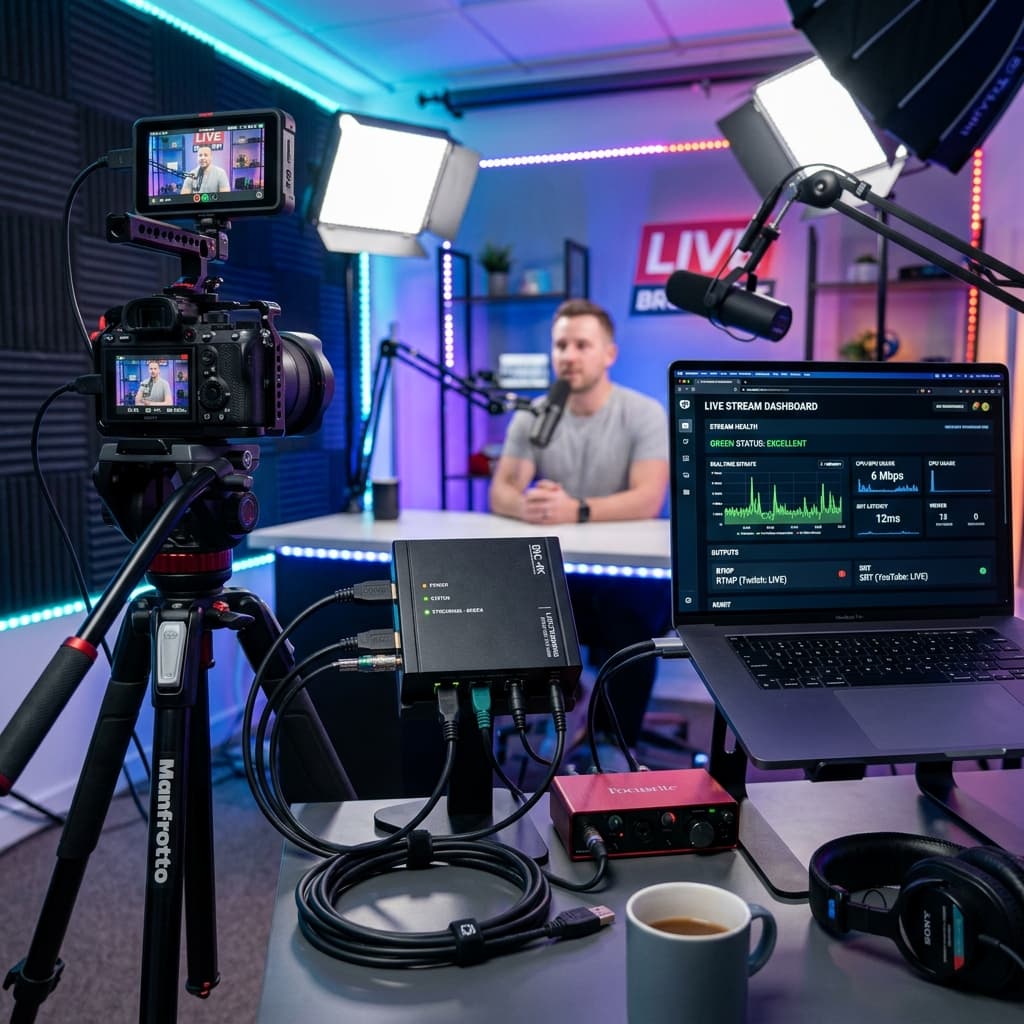
The digital video transmission landscape is undergoing a massive transformation as broadcasters, event producers, and enterprise streaming operators transition away from costly dedicated satellite links and private fiber lines toward public internet protocol networks. Delivering high quality live video over unmanaged internet connections presents significant engineering challenges, including network jitter, packet loss, bandwidth fluctuations, and latency spikes. Deploying a dedicated srt iptv encoder represents the technological breakthrough designed to overcome public network instabilities by leveraging Secure Reliable Transport protocol engineering. An srt iptv encoder combines advanced hardware video compression with intelligent transport layer packet loss recovery, sub second latency control, and AES stream encryption. Evaluating srt iptv encoder appliances requires examining key technical benchmarks including Automatic Repeat Request packet recovery mechanisms, configurable latency buffer windows, H265 HEVC encoding efficiency, multi mode operating roles, and continuous stream uptime. In this detailed technical analysis, we examine how srt iptv encoder devices process live video feeds, analyze critical transport parameters, detail step by step setup procedures, answer common operator questions, and explain why pairing hardware SRT encoders with the Eagle4k cloud distribution network guarantees maximum stream stability and pristine four K video delivery.
## Understanding the Protocol Architecture of an SRT IPTV Encoder
To understand how low latency internet video transport functions, it is necessary to examine the underlying hardware and software design of an srt iptv encoder. Traditional streaming transport protocols such as RTMP rely on TCP connection handshakes, which suffer from severe throughput drops when packet loss occurs over long distances. Legacy HTTP protocols introduce multi second segment buffering that negates real time interactive broadcasting.
In contrast, an advanced srt iptv encoder operates at the transport layer using UDP packetization enhanced with intelligent error recovery. When raw uncompressed video enters the HDMI or SDI input interfaces, the sdi or hdmi source is compressed using High Efficiency Video Coding H265 or H264 hardware encoders. The compressed media packets are encapsulated into SRT transport frames containing precise timestamps and sequence headers. If network congestion causes data packets to drop in transit across the public internet, the srt iptv encoder dynamically processes Selective Repeat ARQ retransmission requests to resend missing packets before video frame rendering deadlines occur. By maintaining low overhead packet recovery directly in hardware silicon, processing and transmission delay is maintained at a microscopic sub second level, enabling silky smooth four K video playback across unmanaged global networks.
## Essential Evaluation Criteria for Selecting SRT IPTV Encoder Systems
Selecting the ideal srt iptv encoder appliance requires evaluating vital technical parameters engineered for reliable public internet video delivery. Here are the primary benchmarks that define an enterprise class srt iptv encoder.
1. Robust ARQ Packet Loss Recovery and Jitter Mitigation. Enterprise processing chipsets allow an srt iptv encoder to recover up to twenty percent network packet loss without stream buffering or visual corruption.
2. Versatile Operating Modes Including Caller Listener and Rendezvous. Supporting all three SRT connection modes enables an srt iptv encoder to establish reliable streams across strict corporate firewalls and complex network routers.
3. AES One Hundred Twenty Eight and Two Hundred Fifty Six Bit Encryption. Built in hardware encryption security ensures an srt iptv encoder protects high value live sports feeds and confidential corporate broadcasts from unauthorized interception.
4. Advanced H265 HEVC Hardware Compression Efficiency. Utilizing modern H265 video compression algorithms enables an srt iptv encoder to deliver clear four K Ultra HD picture quality while cutting required internet bandwidth by up to fifty percent.
5. Configurable Latency Buffer Optimization. Precise latency control features allow an srt iptv encoder to tune transmission delay down to sub second levels based on round trip time measurement between sender and receiver.
## Network Deployment Strategies and Firewall Traversal for SRT IPTV Encoder Units
Deploying live video streams over public internet infrastructure requires robust network traversal and security capabilities. Traditional streaming setups often require static public IP addresses and complex port forwarding configurations that complicate remote broadcasting.
An enterprise srt iptv encoder resolves network connectivity challenges by supporting flexible connection modes. When broadcasting from remote locations behind restrictive cellular networks or hotel firewalls, configuring the srt iptv encoder in SRT Caller mode allows the device to initiate outbound connection requests directly to a central cloud server listening on a public IP address. Once the connection handshake finishes, a bidirectional control channel is established, allowing media data to flow securely out of the firewall without requiring local port forwarding. Additionally, for point to point transmission between two fixed broadcast sites, setting the srt iptv encoder to Rendezvous mode enables automatic NAT traversal, allowing both ends to negotiate a secure connection simultaneously.
## Integrating SRT IPTV Encoder Technology with Eagle4k Infrastructure
While an sdi or hdmi srt iptv encoder ensures reliable video ingestion and internet transport, delivering live streams to massive global audiences requires an expansive cloud edge network. Inadequate server capacity can create bottleneck points, negating the stability advantages provided by the encoder.
Pairing an srt iptv encoder with the Eagle4k cloud distribution network creates an end to end high performance streaming pipeline. Eagle4k operates global edge server clusters equipped with Anti Freeze version nine acceleration software. When the SRT output stream from an srt iptv encoder reaches Eagle4k ingestion servers, Intelligent Traffic Routing automatically ingests the stream, decodes or remuxes the media, and distributes data packets across low latency fiber backbones directly to viewer displays. This combined architecture guarantees ninety nine point ninety nine percent server uptime, instant channel switching speeds, and buffer free four K video playback for viewers across Smart TVs, Firesticks, and mobile applications.
## Step by Step Workflow for Configuring SRT IPTV Encoder Appliances
Configuring an srt iptv encoder for live video streaming across public internet connections involves a simple setup procedure. Follow these logical steps to start broadcasting your video stream.
1. Connect your uncompressed HDMI or SDI video camera feed directly into the video input port of your srt iptv encoder.
2. Connect a standard Ethernet network cable from the LAN port of the encoder to your internet router or local switch.
3. Power on the device and locate the assigned static or DHCP IP address using the hardware status screen or network scanner utility.
4. Open a web browser on a computer connected to the same local network and enter the encoder IP address into the address bar.
5. Log into the web administration panel and navigate to the video encoding menu to select H265 HEVC as your primary codec format.
6. Set the video resolution to four K or high definition with a target frame rate of sixty frames per second.
7. Navigate to the network streaming menu, select SRT Caller mode, and enter the destination IP address, port number, and passphrase provided by your Eagle4k distribution portal.
8. Save the system configuration and click start to initiate live encoding and establish a secure low latency stream.
## Frequently Asked Questions About SRT IPTV Encoder Hardware
Question one. What is an srt iptv encoder and why is it used for live streaming.
Answer. An srt iptv encoder is a hardware device that compresses raw video feeds and encapsulates the data into Secure Reliable Transport protocol frames, enabling secure sub second latency live streaming across unpredictable internet connections.
Question two. How does an srt iptv encoder handle network packet loss during live broadcasts.
Answer. An srt iptv encoder uses Selective Repeat Automatic Repeat Request ARQ packet loss recovery, allowing the receiver to request missing packets which the encoder retransmits instantly before video frame rendering.
Question three. Can an srt iptv encoder encrypt live video streams for security.
Answer. Yes, an enterprise srt iptv encoder supports AES one hundred twenty eight and AES two hundred fifty six bit encryption, securing video content during transmission over public internet backbones.
Question four. What latency can be achieved when using an srt iptv encoder.
Answer. An srt iptv encoder can achieve sub second end to end latency, often reducing total delay down to under five hundred milliseconds depending on round trip network distance and buffer configuration.
Question five. Why is pairing an srt iptv encoder with Eagle4k cloud infrastructure recommended.
Answer. Eagle4k provides global cloud ingestion servers, Anti Freeze version nine software technology, and high speed edge routing, ensuring streams generated by an srt iptv encoder reach subscribers instantly with maximum stability and four K visual quality.
## Summary and System Recommendations
In summary, selecting a high performance srt iptv encoder is the single most effective technological step for media organizations seeking to broadcast secure, ultra low latency live video over public internet networks. By combining hardware accelerated H265 compression, ARQ packet loss recovery, and AES stream encryption, SRT encoding hardware delivers broadcast quality stability without expensive leased lines. Connecting your srt iptv encoder to the enterprise cloud network at Eagle4k guarantees ultimate reliability, seamless global distribution, and pristine four K resolution streaming across all subscriber displays.
The digital video transmission landscape is undergoing a massive transformation as broadcasters, event producers, and enterprise streaming operators transition away from costly dedicated satellite links and private fiber lines toward public internet protocol networks. Delivering high quality live video over unmanaged internet connections presents significant engineering challenges, including network jitter, packet loss, bandwidth fluctuations, and latency spikes. Deploying a dedicated srt iptv encoder represents the technological breakthrough designed to overcome public network instabilities by leveraging Secure Reliable Transport protocol engineering. An srt iptv encoder combines advanced hardware video compression with intelligent transport layer packet loss recovery, sub second latency control, and AES stream encryption. Evaluating srt iptv encoder appliances requires examining key technical benchmarks including Automatic Repeat Request packet recovery mechanisms, configurable latency buffer windows, H265 HEVC encoding efficiency, multi mode operating roles, and continuous stream uptime. In this detailed technical analysis, we examine how srt iptv encoder devices process live video feeds, analyze critical transport parameters, detail step by step setup procedures, answer common operator questions, and explain why pairing hardware SRT encoders with the Eagle4k cloud distribution network guarantees maximum stream stability and pristine four K video delivery.
## Understanding the Protocol Architecture of an SRT IPTV Encoder
To understand how low latency internet video transport functions, it is necessary to examine the underlying hardware and software design of an srt iptv encoder. Traditional streaming transport protocols such as RTMP rely on TCP connection handshakes, which suffer from severe throughput drops when packet loss occurs over long distances. Legacy HTTP protocols introduce multi second segment buffering that negates real time interactive broadcasting.
In contrast, an advanced srt iptv encoder operates at the transport layer using UDP packetization enhanced with intelligent error recovery. When raw uncompressed video enters the HDMI or SDI input interfaces, the sdi or hdmi source is compressed using High Efficiency Video Coding H265 or H264 hardware encoders. The compressed media packets are encapsulated into SRT transport frames containing precise timestamps and sequence headers. If network congestion causes data packets to drop in transit across the public internet, the srt iptv encoder dynamically processes Selective Repeat ARQ retransmission requests to resend missing packets before video frame rendering deadlines occur. By maintaining low overhead packet recovery directly in hardware silicon, processing and transmission delay is maintained at a microscopic sub second level, enabling silky smooth four K video playback across unmanaged global networks.
## Essential Evaluation Criteria for Selecting SRT IPTV Encoder Systems
Selecting the ideal srt iptv encoder appliance requires evaluating vital technical parameters engineered for reliable public internet video delivery. Here are the primary benchmarks that define an enterprise class srt iptv encoder.
1. Robust ARQ Packet Loss Recovery and Jitter Mitigation. Enterprise processing chipsets allow an srt iptv encoder to recover up to twenty percent network packet loss without stream buffering or visual corruption.
2. Versatile Operating Modes Including Caller Listener and Rendezvous. Supporting all three SRT connection modes enables an srt iptv encoder to establish reliable streams across strict corporate firewalls and complex network routers.
3. AES One Hundred Twenty Eight and Two Hundred Fifty Six Bit Encryption. Built in hardware encryption security ensures an srt iptv encoder protects high value live sports feeds and confidential corporate broadcasts from unauthorized interception.
4. Advanced H265 HEVC Hardware Compression Efficiency. Utilizing modern H265 video compression algorithms enables an srt iptv encoder to deliver clear four K Ultra HD picture quality while cutting required internet bandwidth by up to fifty percent.
5. Configurable Latency Buffer Optimization. Precise latency control features allow an srt iptv encoder to tune transmission delay down to sub second levels based on round trip time measurement between sender and receiver.
## Network Deployment Strategies and Firewall Traversal for SRT IPTV Encoder Units
Deploying live video streams over public internet infrastructure requires robust network traversal and security capabilities. Traditional streaming setups often require static public IP addresses and complex port forwarding configurations that complicate remote broadcasting.
An enterprise srt iptv encoder resolves network connectivity challenges by supporting flexible connection modes. When broadcasting from remote locations behind restrictive cellular networks or hotel firewalls, configuring the srt iptv encoder in SRT Caller mode allows the device to initiate outbound connection requests directly to a central cloud server listening on a public IP address. Once the connection handshake finishes, a bidirectional control channel is established, allowing media data to flow securely out of the firewall without requiring local port forwarding. Additionally, for point to point transmission between two fixed broadcast sites, setting the srt iptv encoder to Rendezvous mode enables automatic NAT traversal, allowing both ends to negotiate a secure connection simultaneously.
## Integrating SRT IPTV Encoder Technology with Eagle4k Infrastructure
While an sdi or hdmi srt iptv encoder ensures reliable video ingestion and internet transport, delivering live streams to massive global audiences requires an expansive cloud edge network. Inadequate server capacity can create bottleneck points, negating the stability advantages provided by the encoder.
Pairing an srt iptv encoder with the Eagle4k cloud distribution network creates an end to end high performance streaming pipeline. Eagle4k operates global edge server clusters equipped with Anti Freeze version nine acceleration software. When the SRT output stream from an srt iptv encoder reaches Eagle4k ingestion servers, Intelligent Traffic Routing automatically ingests the stream, decodes or remuxes the media, and distributes data packets across low latency fiber backbones directly to viewer displays. This combined architecture guarantees ninety nine point ninety nine percent server uptime, instant channel switching speeds, and buffer free four K video playback for viewers across Smart TVs, Firesticks, and mobile applications.
## Step by Step Workflow for Configuring SRT IPTV Encoder Appliances
Configuring an srt iptv encoder for live video streaming across public internet connections involves a simple setup procedure. Follow these logical steps to start broadcasting your video stream.
1. Connect your uncompressed HDMI or SDI video camera feed directly into the video input port of your srt iptv encoder.
2. Connect a standard Ethernet network cable from the LAN port of the encoder to your internet router or local switch.
3. Power on the device and locate the assigned static or DHCP IP address using the hardware status screen or network scanner utility.
4. Open a web browser on a computer connected to the same local network and enter the encoder IP address into the address bar.
5. Log into the web administration panel and navigate to the video encoding menu to select H265 HEVC as your primary codec format.
6. Set the video resolution to four K or high definition with a target frame rate of sixty frames per second.
7. Navigate to the network streaming menu, select SRT Caller mode, and enter the destination IP address, port number, and passphrase provided by your Eagle4k distribution portal.
8. Save the system configuration and click start to initiate live encoding and establish a secure low latency stream.
## Frequently Asked Questions About SRT IPTV Encoder Hardware
Question one. What is an srt iptv encoder and why is it used for live streaming.
Answer. An srt iptv encoder is a hardware device that compresses raw video feeds and encapsulates the data into Secure Reliable Transport protocol frames, enabling secure sub second latency live streaming across unpredictable internet connections.
Question two. How does an srt iptv encoder handle network packet loss during live broadcasts.
Answer. An srt iptv encoder uses Selective Repeat Automatic Repeat Request ARQ packet loss recovery, allowing the receiver to request missing packets which the encoder retransmits instantly before video frame rendering.
Question three. Can an srt iptv encoder encrypt live video streams for security.
Answer. Yes, an enterprise srt iptv encoder supports AES one hundred twenty eight and AES two hundred fifty six bit encryption, securing video content during transmission over public internet backbones.
Question four. What latency can be achieved when using an srt iptv encoder.
Answer. An srt iptv encoder can achieve sub second end to end latency, often reducing total delay down to under five hundred milliseconds depending on round trip network distance and buffer configuration.
Question five. Why is pairing an srt iptv encoder with Eagle4k cloud infrastructure recommended.
Answer. Eagle4k provides global cloud ingestion servers, Anti Freeze version nine software technology, and high speed edge routing, ensuring streams generated by an srt iptv encoder reach subscribers instantly with maximum stability and four K visual quality.
## Summary and System Recommendations
In summary, selecting a high performance srt iptv encoder is the single most effective technological step for media organizations seeking to broadcast secure, ultra low latency live video over public internet networks. By combining hardware accelerated H265 compression, ARQ packet loss recovery, and AES stream encryption, SRT encoding hardware delivers broadcast quality stability without expensive leased lines. Connecting your srt iptv encoder to the enterprise cloud network at Eagle4k guarantees ultimate reliability, seamless global distribution, and pristine four K resolution streaming across all subscriber displays.