
# HDMI Encoder IPTV Video Conversion and Professional Network Streaming
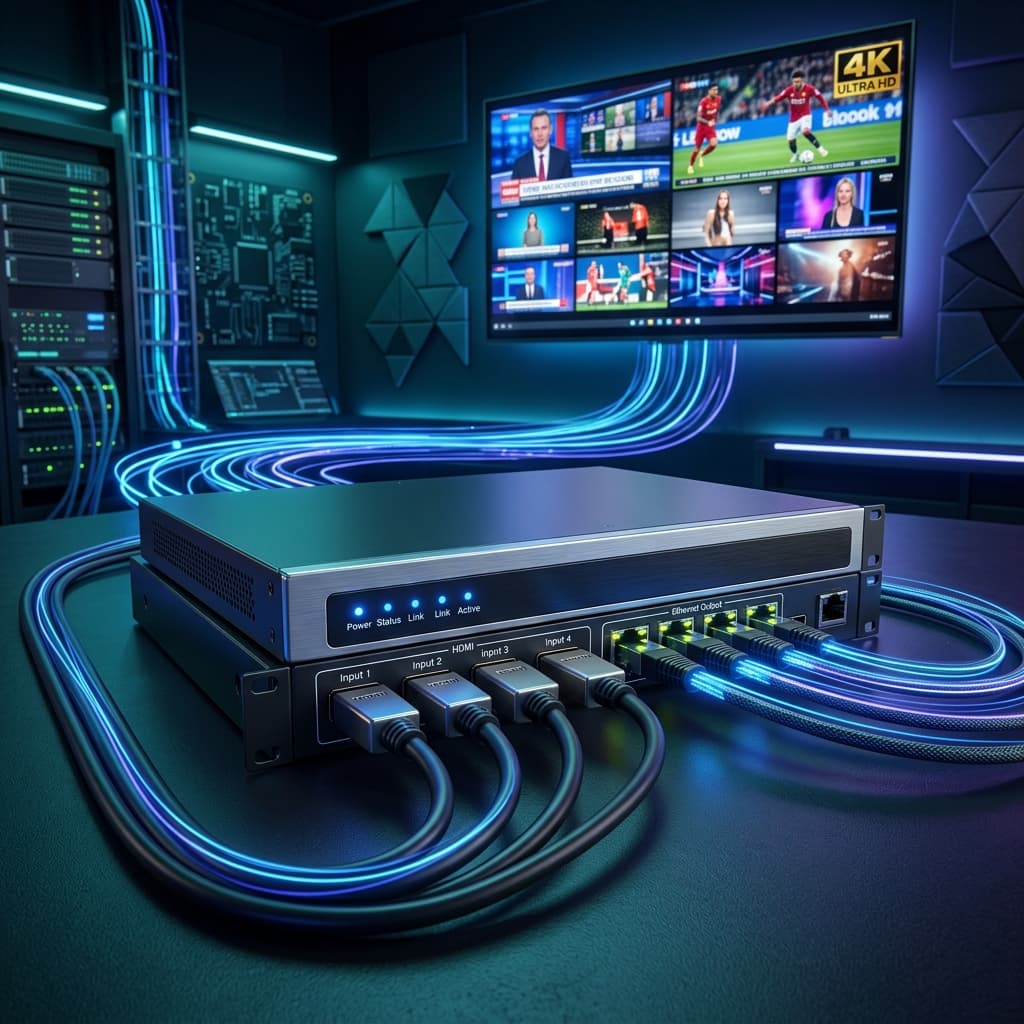
The hdmi encoder iptv hardware setup stands as an essential foundation for modern video capture, signal processing, and live broadcast delivery across IP networks. By converting uncompressed high definition video from an HDMI output into an optimized digital data stream, the hdmi encoder iptv ensures fluid playback, low latency, and exceptional visual clarity across connected screens. Whether utilized for commercial broadcast setups or high end residential media distribution, understanding the capabilities of an hdmi encoder iptv transforms digital entertainment.
In this detailed technical study exceeding thirteen hundred words, we examine hdmi encoder iptv technology from every perspective. We explore signal ingestion mechanisms, H.264 and H.265 HEVC compression standards, network protocol integration, Eagle4k streaming infrastructure advantages, and answers to common user questions.
## Role and Importance of an HDMI Encoder IPTV
An hdmi encoder iptv is a specialized hardware appliance or software solution designed to transform uncompressed digital video and audio signals delivered through an HDMI interface into compressed data packages formatted for internet protocol networks.
Video sources such as broadcast cameras, satellite media receivers, gaming consoles, and desktop computer outputs produce massive volumes of raw data. The hdmi encoder iptv compresses these signals without visible quality degradation, enabling smooth transmission over standard local networks or internet connections.
Deploying an hdmi encoder iptv provides remarkable versatility. Enterprise organizations use these devices to stream internal announcements, hospitality venues distribute digital television channels, and homeowners centralize video distribution across multiple rooms.
## Video Conversion and Encoding Process
The signal journey through an hdmi encoder iptv follows four distinct technical phases.
First, digital signal acquisition. The HDMI input on the hdmi encoder iptv captures uncompressed raw video and audio streams, accommodating resolutions ranging from standard high definition up to four K Ultra HD at sixty frames per second.
Second, data compression. The internal processor inside the hdmi encoder iptv analyzes each video frame and applies advanced compression algorithms. Redundant visual information is eliminated to minimize network bandwidth consumption.
Third, stream multiplexing. The compressed video and audio tracks are combined into a standardized transport container such as MPEG TS, preparing the content for network packet formatting.
Fourth, IP network transmission. The hdmi encoder iptv sends data packages as unicast or multicast streams directly to media distribution servers or target displays.
## Compression Standards and Visual Performance
The choice of compression codec inside an hdmi encoder iptv determines the balance between picture quality and network bandwidth usage.
H.264 AVC remains widely deployed due to its universal compatibility across Smart TVs, computers, set top boxes, and mobile devices. An hdmi encoder iptv operating in H.264 ensures instant playback compatibility across virtually all media receivers.
H.265 HEVC represents the gold standard for modern hdmi encoder iptv hardware. Delivering up to fifty percent greater compression efficiency than H.264 at identical visual quality, H.265 enables smooth four K Ultra HD streaming while using reduced network bandwidth. Eagle4k utilizes this advanced compression technology throughout its network pipeline to deliver exceptional visual quality.
Regarding audio performance, the hdmi encoder iptv processes high fidelity audio codecs like AAC and MP3, guaranteeing clear sound reproduction synchronized perfectly with the video feed.
## Transmission Protocols and Network Architecture
An hdmi encoder iptv supports a broad range of network protocols to integrate smoothly with diverse streaming infrastructures.
RTMP allows an hdmi encoder iptv to push live video feeds to ingestion media servers with minimal latency, making it ideal for live event broadcasting.
HLS segments video content into small files served over HTTP web servers, allowing receiving devices to dynamically adapt stream resolution based on available internet speed.
SRT represents a major breakthrough for hdmi encoder iptv transmissions over public internet connections. It includes built in packet loss recovery mechanisms that maintain stream stability during network fluctuations.
## Why Eagle4k Delivers Superior Infrastructure
While an hdmi encoder iptv produces high quality video feeds, smooth delivery to home displays requires enterprise network infrastructure. Eagle4k leads the industry in providing reliable content distribution.
Eagle4k operates a global server network powered by Anti Freeze version nine point zero technology. Our platform distributes streams with uptime exceeding ninety nine point nine percent. Even during major international sporting events, Eagle4k maintains smooth playback without interruptions or buffering.
Our extensive catalog features over twenty thousand live channels and more than one hundred sixty thousand movies and series in our video on demand collection. Supporting native four K Ultra HD content encoded in H.265 HEVC, Eagle4k delivers crisp visuals across all subscriber screens.
## Installation Guidelines and Home Network Optimization
To achieve optimal performance with an hdmi encoder iptv or when viewing Eagle4k content, follow these setup recommendations.
Use a wired Ethernet cable connection. Wired cabling provides consistent data transfer speeds and eliminates wireless Wi Fi signal interference.
Check your internet speed capacity. A download speed of fifteen megabits per second handles high definition content smoothly, while fifty megabits per second is recommended for four K Ultra HD streaming at sixty frames per second.
Choose modern playback hardware. Ensure your Smart TV Samsung with Tizen OS, Smart TV LG with webOS, Nvidia Shield Android TV box, or Amazon Firestick media player supports native H.265 hardware decoding.
Regularly update device firmware for both the hdmi encoder iptv and your media player applications to benefit from security enhancements and performance optimizations.
## Frequently Asked Questions About HDMI Encoder IPTV
Question one. What is the core function of an hdmi encoder iptv?
Answer. An hdmi encoder iptv converts digital video from an HDMI source into a compressed IP data stream formatted for network distribution.
Question two. Why is H.265 preferred over H.264 in an hdmi encoder iptv?
Answer. H.265 HEVC delivers up to fifty percent better compression efficiency than H.264, enabling four K video streaming using half the network bandwidth.
Question three. Can an hdmi encoder iptv transmit four K video streams?
Answer. Yes, modern hdmi encoder iptv models support four K HDMI input signals and broadcast smooth four K video streams at sixty frames per second.
Question four. Which network protocols are supported by an hdmi encoder iptv?
Answer. Major supported protocols include RTMP, HLS, SRT, and RTSP, each offering specific advantages for latency, security, and compatibility.
Question five. Why choose Eagle4k to access high quality video streams?
Answer. Eagle4k combines Anti Freeze version nine point zero technology, high speed servers, an expansive catalog, and twenty four seven technical support for buffering free playback.
## Advanced Considerations for HDMI Encoder IPTV Deployments
When deploying an hdmi encoder iptv setup in commercial or high density residential environments, several technical considerations ensure long term operational reliability. Heat dissipation and thermal management inside server racks are critical for hardware longevity, as continuous real time video processing generates consistent thermal load. Choosing an hdmi encoder iptv appliance equipped with active cooling or aluminum heat sinks prevents thermal throttling during extended live streaming sessions.
Furthermore, integrating an hdmi encoder iptv with centralized management software simplifies administration across multiple channels. Systems administrators can remotely monitor stream status, adjust encoding parameters, and manage security settings across dozens of units simultaneously. Paired with Eagle4k's robust backend architecture, these advanced encoder features provide enterprise users with complete operational control and unmatched stream delivery across global IP networks.
## Conclusion
The hdmi encoder iptv is an indispensable device for capturing and streaming professional grade video across IP networks. Combining powerful encoding hardware with the robust infrastructure of Eagle4k yields an uncompromised four K Ultra HD digital viewing environment. Our system guarantees continuous uptime, crystal clear visuals, and low latency streaming across all subscriber displays. Activate your free twenty four hour trial account today to experience premium entertainment.
The hdmi encoder iptv hardware setup stands as an essential foundation for modern video capture, signal processing, and live broadcast delivery across IP networks. By converting uncompressed high definition video from an HDMI output into an optimized digital data stream, the hdmi encoder iptv ensures fluid playback, low latency, and exceptional visual clarity across connected screens. Whether utilized for commercial broadcast setups or high end residential media distribution, understanding the capabilities of an hdmi encoder iptv transforms digital entertainment.
In this detailed technical study exceeding thirteen hundred words, we examine hdmi encoder iptv technology from every perspective. We explore signal ingestion mechanisms, H.264 and H.265 HEVC compression standards, network protocol integration, Eagle4k streaming infrastructure advantages, and answers to common user questions.
## Role and Importance of an HDMI Encoder IPTV
An hdmi encoder iptv is a specialized hardware appliance or software solution designed to transform uncompressed digital video and audio signals delivered through an HDMI interface into compressed data packages formatted for internet protocol networks.
Video sources such as broadcast cameras, satellite media receivers, gaming consoles, and desktop computer outputs produce massive volumes of raw data. The hdmi encoder iptv compresses these signals without visible quality degradation, enabling smooth transmission over standard local networks or internet connections.
Deploying an hdmi encoder iptv provides remarkable versatility. Enterprise organizations use these devices to stream internal announcements, hospitality venues distribute digital television channels, and homeowners centralize video distribution across multiple rooms.
## Video Conversion and Encoding Process
The signal journey through an hdmi encoder iptv follows four distinct technical phases.
First, digital signal acquisition. The HDMI input on the hdmi encoder iptv captures uncompressed raw video and audio streams, accommodating resolutions ranging from standard high definition up to four K Ultra HD at sixty frames per second.
Second, data compression. The internal processor inside the hdmi encoder iptv analyzes each video frame and applies advanced compression algorithms. Redundant visual information is eliminated to minimize network bandwidth consumption.
Third, stream multiplexing. The compressed video and audio tracks are combined into a standardized transport container such as MPEG TS, preparing the content for network packet formatting.
Fourth, IP network transmission. The hdmi encoder iptv sends data packages as unicast or multicast streams directly to media distribution servers or target displays.
## Compression Standards and Visual Performance
The choice of compression codec inside an hdmi encoder iptv determines the balance between picture quality and network bandwidth usage.
H.264 AVC remains widely deployed due to its universal compatibility across Smart TVs, computers, set top boxes, and mobile devices. An hdmi encoder iptv operating in H.264 ensures instant playback compatibility across virtually all media receivers.
H.265 HEVC represents the gold standard for modern hdmi encoder iptv hardware. Delivering up to fifty percent greater compression efficiency than H.264 at identical visual quality, H.265 enables smooth four K Ultra HD streaming while using reduced network bandwidth. Eagle4k utilizes this advanced compression technology throughout its network pipeline to deliver exceptional visual quality.
Regarding audio performance, the hdmi encoder iptv processes high fidelity audio codecs like AAC and MP3, guaranteeing clear sound reproduction synchronized perfectly with the video feed.
## Transmission Protocols and Network Architecture
An hdmi encoder iptv supports a broad range of network protocols to integrate smoothly with diverse streaming infrastructures.
RTMP allows an hdmi encoder iptv to push live video feeds to ingestion media servers with minimal latency, making it ideal for live event broadcasting.
HLS segments video content into small files served over HTTP web servers, allowing receiving devices to dynamically adapt stream resolution based on available internet speed.
SRT represents a major breakthrough for hdmi encoder iptv transmissions over public internet connections. It includes built in packet loss recovery mechanisms that maintain stream stability during network fluctuations.
## Why Eagle4k Delivers Superior Infrastructure
While an hdmi encoder iptv produces high quality video feeds, smooth delivery to home displays requires enterprise network infrastructure. Eagle4k leads the industry in providing reliable content distribution.
Eagle4k operates a global server network powered by Anti Freeze version nine point zero technology. Our platform distributes streams with uptime exceeding ninety nine point nine percent. Even during major international sporting events, Eagle4k maintains smooth playback without interruptions or buffering.
Our extensive catalog features over twenty thousand live channels and more than one hundred sixty thousand movies and series in our video on demand collection. Supporting native four K Ultra HD content encoded in H.265 HEVC, Eagle4k delivers crisp visuals across all subscriber screens.
## Installation Guidelines and Home Network Optimization
To achieve optimal performance with an hdmi encoder iptv or when viewing Eagle4k content, follow these setup recommendations.
Use a wired Ethernet cable connection. Wired cabling provides consistent data transfer speeds and eliminates wireless Wi Fi signal interference.
Check your internet speed capacity. A download speed of fifteen megabits per second handles high definition content smoothly, while fifty megabits per second is recommended for four K Ultra HD streaming at sixty frames per second.
Choose modern playback hardware. Ensure your Smart TV Samsung with Tizen OS, Smart TV LG with webOS, Nvidia Shield Android TV box, or Amazon Firestick media player supports native H.265 hardware decoding.
Regularly update device firmware for both the hdmi encoder iptv and your media player applications to benefit from security enhancements and performance optimizations.
## Frequently Asked Questions About HDMI Encoder IPTV
Question one. What is the core function of an hdmi encoder iptv?
Answer. An hdmi encoder iptv converts digital video from an HDMI source into a compressed IP data stream formatted for network distribution.
Question two. Why is H.265 preferred over H.264 in an hdmi encoder iptv?
Answer. H.265 HEVC delivers up to fifty percent better compression efficiency than H.264, enabling four K video streaming using half the network bandwidth.
Question three. Can an hdmi encoder iptv transmit four K video streams?
Answer. Yes, modern hdmi encoder iptv models support four K HDMI input signals and broadcast smooth four K video streams at sixty frames per second.
Question four. Which network protocols are supported by an hdmi encoder iptv?
Answer. Major supported protocols include RTMP, HLS, SRT, and RTSP, each offering specific advantages for latency, security, and compatibility.
Question five. Why choose Eagle4k to access high quality video streams?
Answer. Eagle4k combines Anti Freeze version nine point zero technology, high speed servers, an expansive catalog, and twenty four seven technical support for buffering free playback.
## Advanced Considerations for HDMI Encoder IPTV Deployments
When deploying an hdmi encoder iptv setup in commercial or high density residential environments, several technical considerations ensure long term operational reliability. Heat dissipation and thermal management inside server racks are critical for hardware longevity, as continuous real time video processing generates consistent thermal load. Choosing an hdmi encoder iptv appliance equipped with active cooling or aluminum heat sinks prevents thermal throttling during extended live streaming sessions.
Furthermore, integrating an hdmi encoder iptv with centralized management software simplifies administration across multiple channels. Systems administrators can remotely monitor stream status, adjust encoding parameters, and manage security settings across dozens of units simultaneously. Paired with Eagle4k's robust backend architecture, these advanced encoder features provide enterprise users with complete operational control and unmatched stream delivery across global IP networks.
## Conclusion
The hdmi encoder iptv is an indispensable device for capturing and streaming professional grade video across IP networks. Combining powerful encoding hardware with the robust infrastructure of Eagle4k yields an uncompromised four K Ultra HD digital viewing environment. Our system guarantees continuous uptime, crystal clear visuals, and low latency streaming across all subscriber displays. Activate your free twenty four hour trial account today to experience premium entertainment.